



 Microsoft


Unified Data
Bring data from different systems and sources into a connected environment using Microsoft Fabric and OneLake.
Bring your business data, analytics, reporting, and AI workloads together with Microsoft Fabric. LST Consultancy helps businesses plan, implement, integrate, migrate, and optimize Microsoft Fabric environments around their data and business requirements.
Schedule a Consultation
Microsoft Fabric brings data integration, data engineering, analytics, data warehousing, real-time intelligence, and Power BI together in one connected environment. With a unified data foundation, businesses can reduce data silos and make better use of their information.
Bring data from different systems and sources into a connected environment using Microsoft Fabric and OneLake.

Use data engineering, analytics, reporting, and Power BI to turn business data into useful insights.

Prepare your data environment for advanced analytics, machine learning, and AI use cases.

Get guidance on your Microsoft Fabric strategy, architecture, workloads, data requirements, and implementation approach.

Set up a Microsoft Fabric environment based on your business needs, governance, and analytics goals.

Connect data from databases, applications, cloud platforms, files, and other sources using Fabric Data Factory and related technologies.

Build data pipelines and transformation processes that prepare business data for reporting, analytics, and other workloads.

Create structured data warehouse environments that help organize business data for reporting and analytics.

Build interactive reports and dashboards using Power BI and data managed within the Microsoft Fabric environment.

Assess and move suitable data and analytics workloads to Microsoft Fabric with a planned migration approach.

Get ongoing support for monitoring, troubleshooting, optimization, improvements, and changing Fabric requirements.
Microsoft Fabric brings these capabilities together in an integrated environment, with OneLake providing the unified logical data lake foundation across Fabric workloads.
Let’s Talk More
A unified data lake that brings your organization's analytics data together in one connected environment.

Connect, move, transform, and automate data from different sources for analytics and reporting.

Build data pipelines and prepare, transform, and organize data for analytics and business use.

Store and organize structured business data for reporting, analytics, and SQL-based workloads.

Explore data, build machine learning models, and generate insights using Fabric's data science tools.

Analyze streaming and real-time data to help businesses respond to important events and changing conditions.

Create interactive reports and dashboards that turn business data into clear, useful insights.

Detect events and changes in data, then trigger alerts and automated actions when rules are met.
Microsoft describes Fabric as supporting the end-to-end data workflow from data ingestion and preparation through analytics, visualization, and AI scenarios.

Connect information from different systems and data sources to create a more connected data environment.

Create a shared data foundation that allows teams to work with business information across different analytics workloads.

Use Power BI and Fabric data to create interactive reports and dashboards for better visibility.

Bring data integration, engineering, storage, analytics, and reporting together within one connected platform.

Work with real-time data and analytics for business scenarios where timely information matters.

Build a modern data foundation that can support advanced analytics, machine learning, and AI initiatives.
We connect your data requirements with your reporting, analytics, and business goals.
Our Microsoft technology experience supports solutions that can work with Power BI, Power Platform, SharePoint, and Dynamics 365.
We first understand your data, users, reporting requirements, and business objectives before planning the solution.
From planning and architecture to implementation and optimization, we support the full project lifecycle.
Build a data environment that can adapt as your business and data requirements grow.
Get support for troubleshooting, optimization, enhancements, and changing business requirements.


Understand your current data environment, business requirements, reporting needs, and challenges.

Review your data sources, systems, workloads, and opportunities for using Microsoft Fabric.
Define the approach for your Fabric architecture, workloads, data integration, and implementation.
Set up the Microsoft Fabric environment, including data pipelines, storage, analytics, and reporting solutions.

Connect your business data sources and test data flows, reports, permissions, and other requirements.

Monitor environment, improve performance, resolve issues, and support as needs change.
Microsoft Fabric brings different data and analytics workloads together instead of requiring teams to manage them as separate environments. OneLake provides a common logical data lake across Fabric workloads, while services such as Data Factory, Data Engineering, Data Warehouse, Real-Time Intelligence, and Power BI support different stages of the data journey.
For businesses, this can provide a more connected way to collect, prepare, manage, analyze, and present data.
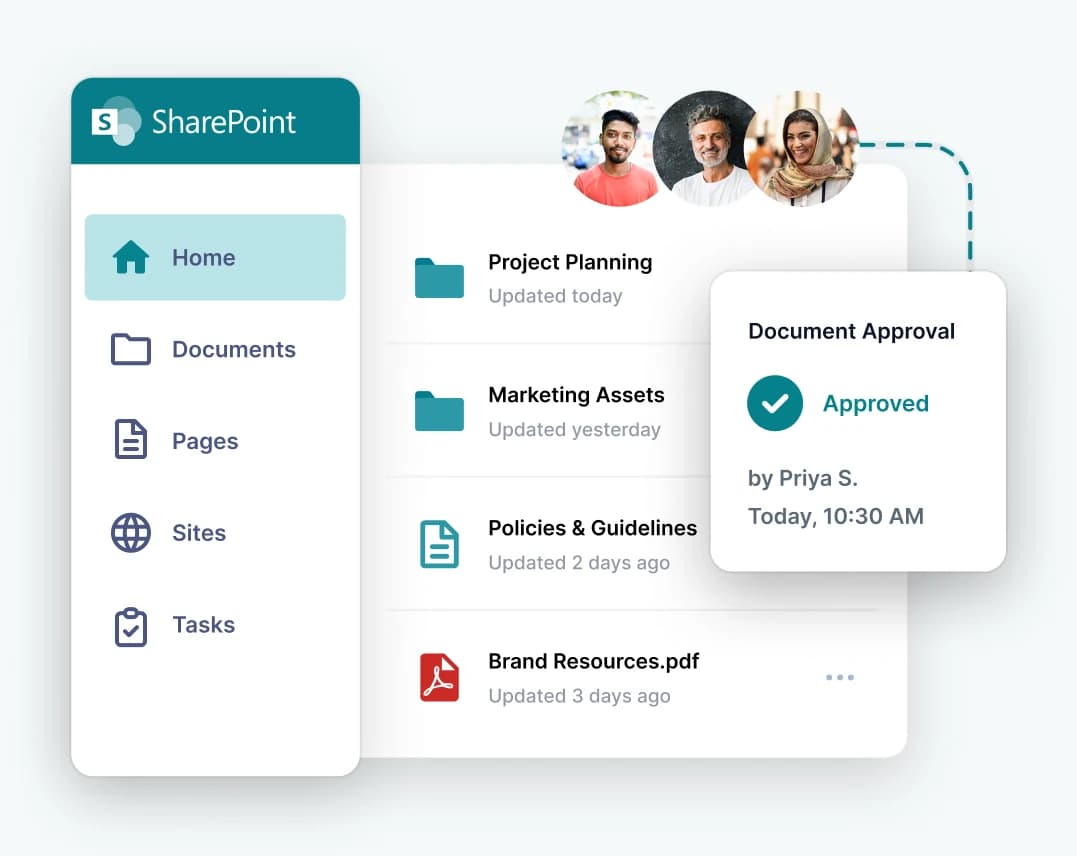
Create secure digital workplaces with centralized document management, collaboration tools, custom portals, and automated workflows.
Explore SharePoint
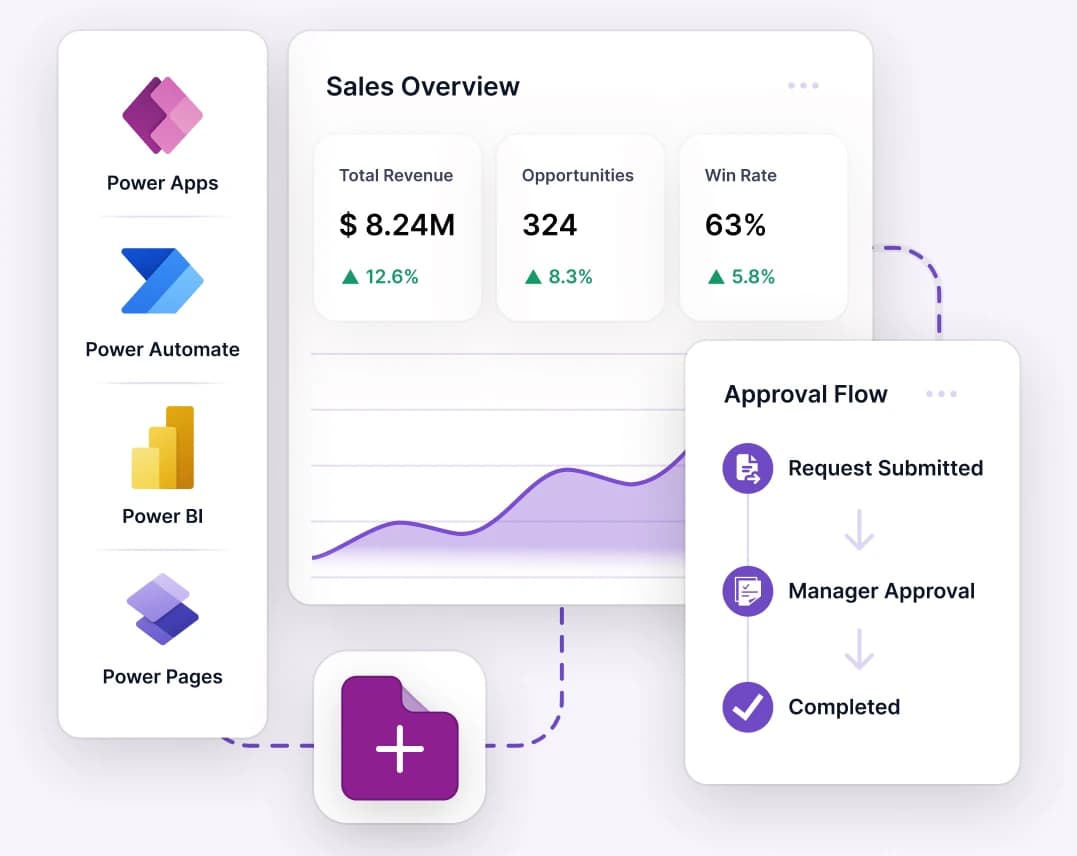
Build custom applications, automate repetitive processes, and turn business data into actionable insights with Microsoft's low-code platform.
Explore Power Platform
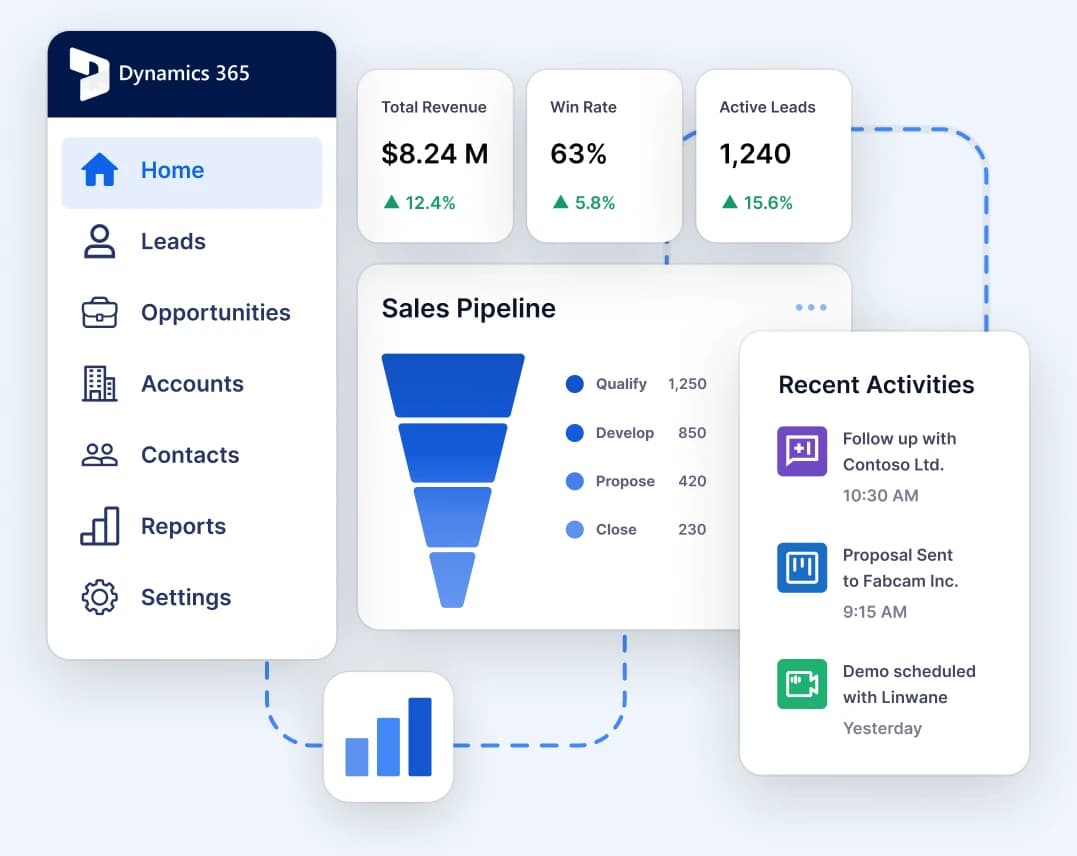
Unify your business processes, improve customer engagement, and make data driven decisions with MS Dynamics 365
Explore MS Dynamics 365
Find answers to common questions about Microsoft Fabric and our services.

Can't find the information you're looking for? Talk to our team about your specific requirements.
Microsoft Fabric is Microsoft's unified data and analytics platform. It brings data integration, data engineering, data warehousing, data science, real-time intelligence and Power BI together in one connected environment, with OneLake as the shared data foundation across its workloads.
Yes. Fabric Data Factory and related tools can connect data from databases, applications, cloud platforms, files and other sources, then move, transform and prepare it for analytics and reporting.
Yes. Power BI is one of the workloads inside Microsoft Fabric, so you can build interactive reports and dashboards on data that is managed within your Fabric environment.
Yes. We help you plan your Fabric architecture and workloads, set up the environment, build data pipelines, storage, analytics and reporting, connect your data sources, and test the solution before rollout.
We provide Microsoft Fabric consulting, implementation, data integration, data engineering, data warehousing, Power BI with Microsoft Fabric, migration to Fabric, and managed services for ongoing monitoring, troubleshooting and optimization.
OneLake is the unified, logical data lake that comes with Microsoft Fabric. It brings your organization's analytics data together in one connected environment that every Fabric workload can use, which helps reduce data silos and duplicate copies.
Microsoft Fabric is designed to support data environments that grow over time, with workloads for data engineering, data warehousing and real-time intelligence. We help you plan an architecture that can adapt as your business and data requirements grow.
Unify your data and analytics with Microsoft Fabric solutions built around your business requirements.
Schedule a Consultation